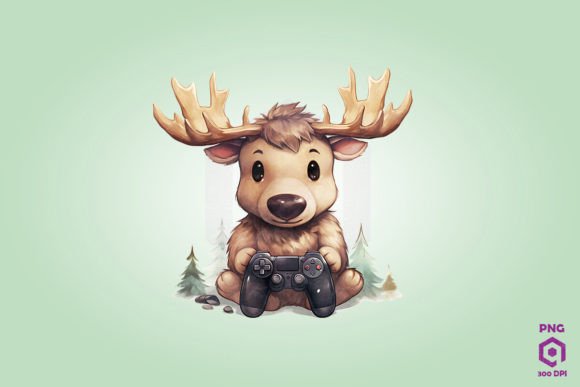
Moose Playing Video Game
As a designer who spends a fair amount of time both behind a digitizing tablet and running a production machine, I’ve learned to look at clipart and illustrations with a very specific eye. It’s not just about whether the art is cute or funny—it’s about whether it will survive the embroidery process and still look like a professional, sellable finished product. The Moose Playing Video Game graphic immediately caught my attention. It sits at a fun intersection of the Wild Animal trend and cozy, indoor hobbyist culture. The inclusion of the coffee element gives it a warm, approachable feel. But can it hold up as a machine embroidery design? Let’s walk through it from a practical, real-world stitching perspective.
More Than Just a Cute Graphic: The Design Appeal
The first thing I notice is the narrative. A moose, usually associated with vast wilderness, is completely absorbed in a video game with a cup of coffee nearby. This juxtaposition creates instant charm. It’s a great example of modern Illustrations that resonate with a specific audience: people who love animals, gaming, and comfort culture. As a Graphics asset, it has a clear, readable silhouette, which is a huge plus for embroidery. We don’t want a lot of tiny, fragmented details that will get lost in the thread. The mood is playful and relaxed, making it a natural fit for custom apparel like sweatshirts or t-shirts.
The “Drink Coffee Wild Animal” sub-theme adds a layer of lifestyle branding. This isn’t just a generic stag or bear; it’s a character with hobbies. For a small shop product, this kind of specificity is gold. It gives the customer a reason to buy beyond just liking the animal—they see themselves in the moose who just wants to relax and play. The visual personality is strong enough to carry a whole line of products, from an embroidered patch to a full tote bag design.
Real-World Performance: Where Does It Stitch Best?
If I were preparing this for a client project, I would immediately think of a high-quality sweatshirt embroidery or a center chest design on a heavy cotton t-shirt. The Moose Playing Video Game design is a conversation starter. It’s perfect for the Etsy seller looking to target the “gamer gift” or “wild animal lover” niche. I can see it working beautifully on a tote bag design for a craft fair, or as a personalized gift for a friend who loves both hunting and gaming.
Let’s talk about the physical stitch-out. The main body of the moose will likely require a combination of satin stitches and fill stitches. The antlers are a defining feature—they need to be digitized with a clean, consistent satin stitch or a carefully pathed fill stitch to avoid looking like a tangled mess. The coffee cup and the game controller are the critical areas that will determine the success of your embroidery project. How small are the buttons? How thick is the coffee cup handle? If these elements are too tiny in the original art, scaling it up for a sweatshirt front (say, a 5x7 or 6x10 hoop) is essential for maintaining clarity.
For a cap or a baby embroidery project, you will need to be much more cautious. High stitch density can distort stretchy fabrics or cause problems on the curved surface of a hat. The small details of the controller might not read well on a bib or a onesie. For a structured hat or a firm canvas tote bag, the density is less of a concern. Always test the design on a scrap fabric that matches your final product. Check the thread color contrast—a dark moose on a dark hoodie will disappear. A lighter, more vibrant thread palette for the Wild Animal motif will read much better on dark backgrounds.
Critical Checklist for Embroidery Success
Because this design originates as a clipart PNG and sublimation graphic, the transition to a digital embroidery file requires thoughtful planning. The smooth gradients of a PNG become solid thread colors. The digitizer must choose thread palettes that capture the essence of the original Illustrations. Here is my practical checklist for anyone planning to use this design:
- Test on Scrap Fabric First: This is non-negotiable. Run a test stitch-out to check the stitch density and the overall look. Pay close attention to the eyes of the moose, the coffee cup, and the game controller buttons.
- Review Hoop Size: The design details are crucial. Don’t shrink it too small for a hat or a sleeve. It likely works best as a chest or center-back design on a t-shirt or sweatshirt where you have a larger hoop size to work with.
- Choose the Right Stabilizer: For garments, use a cut-away stabilizer to prevent the design from distorting, especially if the design has dense fill areas. A tear-away stabilizer might not be sufficient for the structural integrity of the stitches.
- Select High-Contrast Thread Colors: The “Drink Coffee Wild Animal” theme suggests earthy tones (browns, greens, warm creams). Consider using a vibrant accent color for the video game elements to make the scene pop and tell the story clearly.
- Inspect the Digitizing: If you are converting the PNG yourself, pay extra attention to the pathing. Ensure the underlay is solid enough to support the satin stitches on the edges of the moose and the coffee cup. If you are buying a pre-digitized embroidery file, look for clean file formats and check reviews for stitch quality.
Business Value: Is It Right for Your Shop?
For creative entrepreneurs and digital product sellers, this design offers a lot of flexibility. It is sold as a clipart PNG and sublimation file, which means you can use it to create printable mockups, sublimated items (like coffee mugs or mousepads that perfectly match the gaming theme!), or as a base for creating your own machine embroidery design.
However, a critical note for commercial embroidery: just because you bought a clipart does not automatically grant you the right to embroider and sell the finished products or the digital embroidery file itself. You must check the licensing agreement for Moose Playing Video Game. If you are an Etsy seller, look for a Commercial Use license. If you plan to sell the digitized embroidery file as a design asset, you need a specific license that allows the transfer of the graphic. If you are strictly using it as a reference to create an original digitized file for a single client (a “made-to-order” item), most standard commercial licenses cover that, but always confirm the terms. This protects your craft business and ensures you are operating ethically.
From a branding perspective, this design is a strong asset. It creates a cohesive look for a handmade product line. Whether you are making a personalized gift for a holiday or building a collection of custom apparel for a boutique, the unique character of this moose will help your products stand out in a crowded marketplace. It has high “giftability” because it speaks to specific hobbies and interests.
Final Verdict from the Worktable
The Moose Playing Video Game design is a strong, personality-driven graphic that fills a specific niche in the handmade product market. It’s charming, timely, and versatile. The key to success with this embroidery project lies in the preparation. Because it originates as a Graphics asset, it requires a thoughtful digitizing approach and careful scaling.
With proper attention to fabric texture, stabilizer choice, and thread colors, this design can become a top seller for a small business or a beloved personalized gift. It’s not just a design; it’s a story waiting to be stitched into a sweatshirt embroidery, a tote bag design, or a playful embroidered patch. If you take the time to audit the file and test your materials, this moose will be a fantastic addition to your portfolio of finished product offerings.